Why Motivation Doesn't Last (Build Self Discipline Instead)
NextLevel Mindset • August 02, 2026 • 12 Min Read
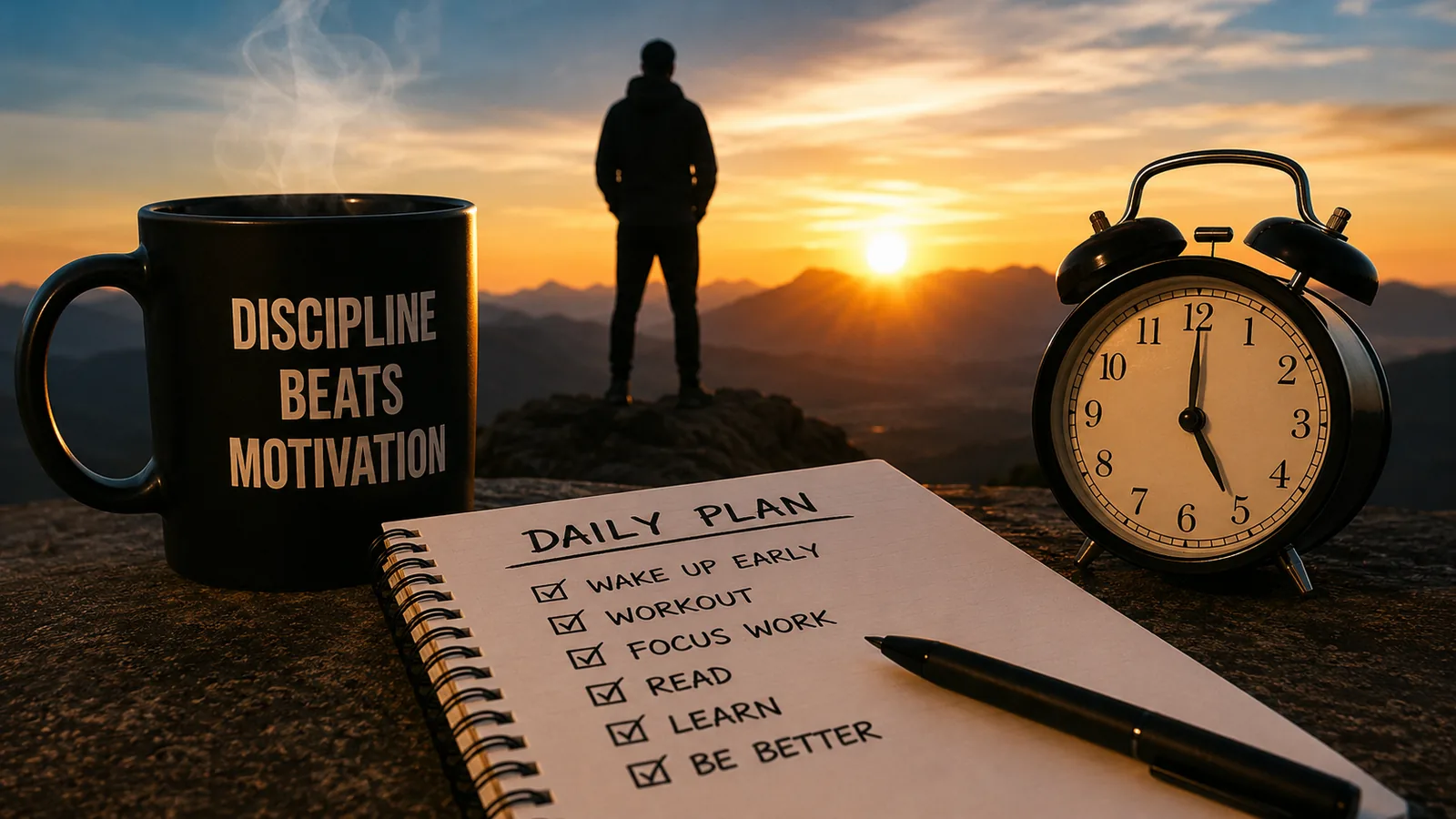 Discipline
Have you ever watched an inspiring motivational video, promised yourself that tomorrow would be different, and then found yourself back to your old habits just a few days later? If your answer is yes, you're not alone. Millions of people experience the same cycle every year. They feel highly motivated after reading a powerful quote, watching a successful entrepreneur, or listening to an inspiring speech. For a short time, they feel unstoppable. Then reality returns. The excitement disappears. The habits disappear. And eventually, the motivation disappears too.
The biggest misunderstanding about success is believing that successful people stay motivated all the time. They don't. In fact, the most successful people in the world rarely depend on motivation. Instead, they rely on something much stronger. Self discipline. Discipline allows you to work when you don't feel like working. It helps you continue when motivation has already left. That's why discipline builds champions while motivation only creates temporary excitement.
In this complete guide, you'll discover why motivation fades so quickly, the psychology behind it, and most importantly, how to build self discipline that keeps you moving forward every single day.
Table of Contents
- Why Motivation Doesn't Last
- Motivation vs Discipline
- The Psychology of Motivation
- How Successful People Stay Consistent
- 7 Ways to Build Self Discipline
- Daily Discipline Checklist
- Common Mistakes
- Frequently Asked Questions
Why Motivation Doesn't Last
Motivation is an emotion. And emotions naturally change. Some mornings you wake up feeling energetic and excited. Other mornings you feel tired, lazy or distracted. If your actions depend entirely on your emotions, your progress will always be inconsistent. That's exactly why motivation alone cannot create long-term success. It helps you start. But it cannot guarantee that you'll continue.
Think about New Year's resolutions. Every January, millions of people promise themselves that they will lose weight, exercise daily, learn new skills or build better habits. For a few weeks, motivation is high. But after a month, most people quit. The goal wasn't the problem. The lack of discipline was.
Motivation vs Discipline
People often use motivation and discipline as if they mean the same thing, but they are completely different. Motivation is a feeling. Discipline is a decision. Motivation depends on your emotions, while discipline depends on your commitment. Imagine two people who both want to become fit. The first person goes to the gym only when they feel motivated. The second person goes whether they feel excited, tired, lazy or stressed. After one year, who do you think will see better results? The answer is obvious. The disciplined person wins almost every time.
Motivation helps you start. Discipline helps you continue. Motivation is temporary. Discipline becomes a lifestyle. Successful entrepreneurs, athletes and leaders don't wake up feeling inspired every single day. They simply follow their routine because they know consistency creates extraordinary results.
The Science Behind Motivation
Your brain constantly looks for pleasure and tries to avoid discomfort. This process is heavily influenced by dopamine, a neurotransmitter often called the "motivation chemical." When you watch an inspiring video, buy something new or receive praise, dopamine levels temporarily increase. You feel excited. You feel unstoppable. But this feeling doesn't last forever. Once dopamine returns to its normal level, your excitement naturally fades. That's why depending only on motivation is dangerous. Instead of chasing temporary emotions, successful people build habits that continue even when the excitement disappears.
Habits reduce the need for motivation. Once an action becomes automatic, you no longer have to convince yourself to do it. You simply do it because it has become part of your identity. That's the real secret behind long-term success.
Why Most People Quit
Many people don't fail because they lack talent. They fail because they expect instant results. They start exercising for one week and expect visible changes. They study for a few days and expect mastery. They launch a business and expect immediate profit. When results don't appear quickly, motivation disappears. Then they quit. The cycle repeats again and again.
Real success works differently. Every workout makes you slightly stronger. Every book makes you slightly smarter. Every focused hour improves your skills. These improvements may seem invisible today, but over months and years they create extraordinary outcomes. Patience is one of the strongest forms of discipline.
Why Successful People Don't Wait for Motivation
One common habit shared by successful people is that they don't negotiate with themselves. They don't wake up and ask, "Do I feel like working today?" Instead, they already know what needs to be done. Their schedule decides. Not their emotions. This simple shift removes unnecessary decisions and saves mental energy.
Think about brushing your teeth. You don't wait until you feel motivated. You simply do it because it has become a habit. Imagine if exercise, reading, learning and working became just as automatic. That's exactly what discipline creates.
The Compound Effect of Discipline
Small actions repeated every day create massive changes over time. Reading ten pages every day equals more than a dozen books in a year. Walking thirty minutes daily adds up to hundreds of hours of exercise. Saving a small amount every month grows into significant wealth over the years. Success rarely comes from one big decision. It comes from hundreds of small disciplined actions performed consistently.
Remember this simple formula:
Motivation starts the journey.
Discipline finishes it.
Whenever you don't feel like working, remind yourself that your
future depends more on today's discipline than today's emotions.
Key Takeaways
- Motivation is temporary, discipline is permanent.
- Habits reduce the need for motivation.
- Dopamine creates excitement but not consistency.
- Small daily actions create extraordinary long-term results.
- Never wait until you "feel ready."
- Take action first-motivation often follows action.
- Consistency always beats intensity.
7 Proven Ways to Build Self Discipline
The good news is that discipline is not something you are born with. It is a skill. Just like learning to drive, swim or speak a new language, discipline becomes stronger through daily practice. Here are seven proven ways to build lasting self discipline.
1. Start With Small Habits
One of the biggest mistakes people make is trying to change their entire life overnight. They decide to wake up at 5 AM, exercise for two hours, read fifty pages, meditate, eat perfectly and quit every bad habit-all at once. It usually lasts only a few days. Instead, begin with one small habit. Read for five minutes. Walk for ten minutes. Do ten push-ups. Small wins create momentum, and momentum builds discipline.
2. Create a Daily Routine
Successful people don't make every decision from scratch each morning. They follow routines. A routine removes unnecessary choices and makes productive actions automatic. For example: Wake up → Drink water → Exercise → Read → Start your most important task. Repeating this sequence every day trains your brain to work without depending on motivation.
3. Remove Distractions
Your environment shapes your behavior. If your phone keeps buzzing, social media is open and notifications never stop, staying disciplined becomes much harder. Turn off unnecessary notifications. Keep your phone away while working. Create a workspace where your goals become easier and distractions become harder. Discipline grows faster in the right environment.
4. Focus on Consistency, Not Perfection
Perfection is the enemy of progress. Missing one workout or one study session doesn't ruin your journey. Giving up does. If you miss one day, simply continue the next day. The goal is to stay consistent over months, not to be perfect every day.
5. Track Your Progress
Writing down your daily progress creates accountability. Use a notebook, calendar or habit tracker. Every completed task becomes visual proof that you are moving forward. Progress, even when small, keeps you motivated to continue.
6. Learn to Delay Gratification
Discipline often means saying "no" to short-term pleasure so you can enjoy bigger rewards later. Watching another hour of social media may feel good today. Finishing your work first creates a better future. Every time you choose long-term success over short-term comfort, your discipline becomes stronger.
7. Remember Your Purpose
Goals tell you what you want. Purpose reminds you why you want it. Whenever you feel like quitting, ask yourself: "Why did I start?" A strong reason gives you the strength to continue when motivation disappears.
Daily Discipline Routine
If you're serious about becoming more disciplined, follow this simple daily routine.
- Wake up at the same time every day.
- Drink two glasses of water.
- Exercise for at least 30 minutes.
- Read 10–20 pages of a good book.
- Write your top three priorities.
- Complete the hardest task first.
- Avoid unnecessary social media during work.
- Review your day before sleeping.
- Sleep for 7–8 hours.
Common Mistakes That Destroy Discipline
- Waiting for motivation before taking action.
- Setting unrealistic goals.
- Trying to change too many habits at once.
- Comparing yourself with other people.
- Using your phone during focused work.
- Skipping routines after one bad day.
- Ignoring sleep and physical health.
Take Action Today
Reading this article won't change your life. Taking action will. Choose just one habit from this guide and start today. Don't wait until Monday. Don't wait until next month. Don't wait until you feel motivated. Start now. Small actions repeated every day are what create extraordinary success. Your future self will thank you.
Frequently Asked Questions
Why doesn't motivation last?
Motivation is driven by emotions, and emotions naturally change over time. That's why relying only on motivation usually leads to inconsistency.
Is discipline more important than motivation?
Yes. Motivation helps you begin, but discipline helps you continue even when you don't feel like taking action.
How long does it take to build self discipline?
There is no fixed timeline. Self discipline grows through consistent daily habits rather than a specific number of days.
Can anyone become disciplined?
Absolutely. Discipline is a skill that anyone can develop with practice, patience and consistency.
What is the best way to stay consistent?
Create a simple routine, start with small habits, remove distractions and track your progress every day.
Final Thoughts
Motivation is a spark. Discipline is the fuel. The people who achieve extraordinary success are not always the most talented or the most motivated. They are the ones who continue showing up every single day, even when they don't feel like it. If you truly want to change your life, stop waiting for motivation. Build systems. Create routines. Stay consistent. One disciplined day may not change your life. But hundreds of disciplined days certainly will. Start today. Your future depends on the choices you make right now.